
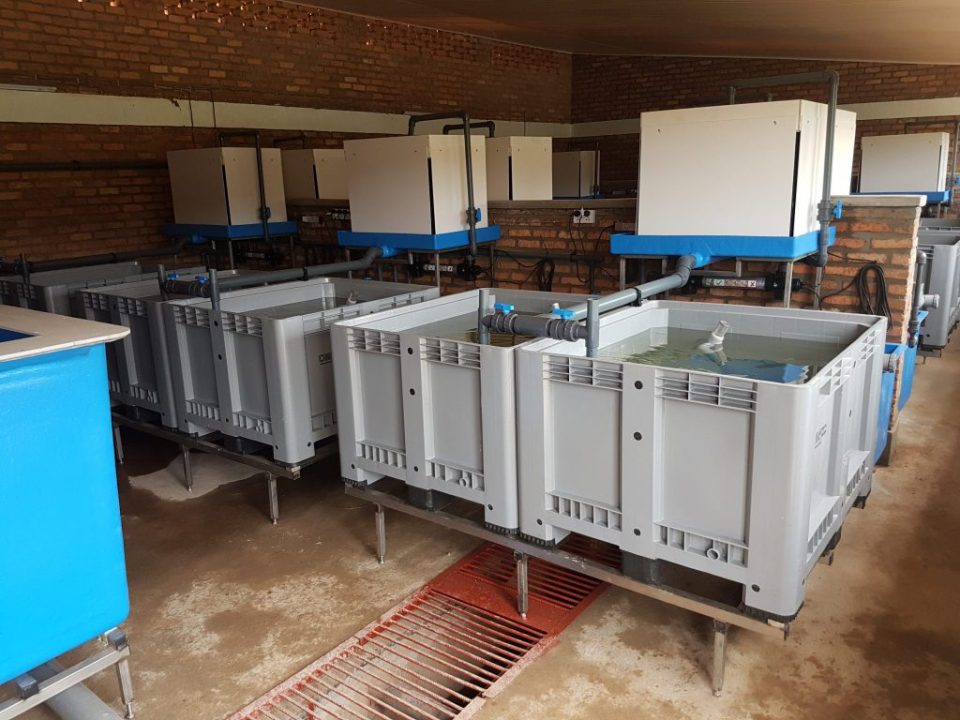
Across Africa, as fish demand rises and pressure mounts on natural water resources, entrepreneurs are increasingly turning to Recirculating Aquaculture System technology to grow fish in controlled environments despite its high costs and technical challenges.
For decades, aquaculture production across much of the continent has depended largely on earthen ponds, lakes and seasonal water availability. But as urban populations explode and demand for fish continues to grow, interest is increasing in RAS technology which enables fish farming through the continuous filtration and reuse of water in tightly controlled production systems.
Aquaculture experts say the technology could help African countries increase fish production while using less land and water while reducing dependence on seafood imports and easing pressure on wild fisheries.
Critics, however, point to high startup costs, unreliable electricity supplies and the specialized expertise required to operate RAS facilities successfully in some areas .
“Aquaculture in Africa today has experienced a significant shift from what existed a decade ago,” said Professor Lanre Badmus, a Nigerian aquaculture expert and director at the World Aquaculture Society (WAS).
According to Badmus, the sector was dominated ten years ago by smallholder farmers operating traditional pond systems characterized by low productivity, limited technical expertise, poor seed quality and weak value chains.
Today, however, the industry is undergoing a transition toward commercialization and intensification, driven by improved genetics, locally formulated feeds, cage culture, digital farm management and growing private-sector participation.
Even so, interest in RAS appears to be growing steadily across parts of Africa, particularly among commercial operators seeking greater efficiency and year-round production while many farmers continue to face challenges in sustaining the systems.
In Nigeria, Badmus said RAS adoption remains relatively limited because of the high initial cost of installation with many components still imported. Nevertheless, he noted that uptake is steadily increasing elsewhere in Africa.
Countries such as Nigeria, South Africa, Egypt, Kenya and Morocco are among those showing growing interest in the technology as governments and investors look for ways to strengthen food security and domestic fish production.
For entrepreneurs such as Badmus, the appeal of the technology lies largely in its efficiency and predictability.
“Many people assume RAS is simply a fish tank with filters,” he said. “In reality, it requires continuous monitoring, skilled management, mature biofilters, robust backup systems and careful water quality management.”
He said several misconceptions continue to surround the technology. Some farmers underestimate the level of management required, while others wrongly believe fish produced in RAS facilities are less healthy or less natural than those raised in conventional systems.
“RAS gives farmers more control over production,” Badmus said. “Instead of depending entirely on weather conditions or large volumes of water, producers can manage the environment much more closely.”
Industry observers say the shift reflects broader changes taking place within African agriculture and food systems. As populations rise and cities expand, farmers are under increasing pressure to produce more food using fewer resources.
The United Nations projects that Africa’s population will continue growing rapidly in coming decades, placing additional pressure on food systems already struggling to meet demand. Fish remains one of the continent’s most important and affordable sources of animal protein.
Despite growing interest in RAS, financing remains a major barrier.
Many African lenders still view the technology as technically complex and high-risk. Financial institutions and funding agencies often lack adequate understanding of aquaculture economics, leaving many farmers unable to secure the capital required for investment.
The financing gap remains one of the most significant constraints to the growth of RAS across the continent.
Morena Khashane, a RAS operator in South Africa’s North Western province attributes the relatively low adoption of the technology in Africa to limited technical expertise and support infrastructure compared with Europe and North America.
Challenges include water quality management, biofilter performance, shortages of skilled personnel, equipment maintenance, oxygen management, disease control and limited access to technical support services.
Khashane believes the technology could become an important component of Africa’s aquaculture future if several obstacles are addressed.
“For RAS to become a significant part of Africa’s aquaculture sector, the continent needs affordable energy, skilled manpower, improved financing mechanisms, lower equipment costs and growth in premium urban fish markets,” he said.
“I expect RAS to grow substantially, but not to replace ponds and cages. Africa’s future is likely to involve a combination of improved technologies and traditional systems serving different markets.”
He added that operational and financial risks remain among the biggest obstacles to wider adoption.
Electricity poses a particularly serious challenge.
Because RAS facilities rely heavily on pumps, aeration systems and filtration equipment, even short power interruptions can place fish stocks at risk.
In countries like South Africa, Nigeria where electricity supplies remain unreliable, many operators depend on backup generators, significantly increasing operating costs. Imported equipment and limited local technical expertise can create additional financial pressure, particularly for smaller producers attempting to enter the sector.
For Royd Mukonda, a national consultant with the Food and Agriculture Organization (FAO) in Zambia, the long-term success of RAS will depend on adapting the technology to African realities rather than simply replicating systems developed elsewhere.
In Zambia, he said, RAS is currently found mainly in pilot projects, hatcheries and a small number of commercial farms targeting high-value species such as tilapia fingerlings and trout.
“In places like Lusaka and Southern Province, where borehole water levels drop and surface water availability is seasonal, RAS makes aquaculture possible where ponds are not viable,” Mukonda said.
“Urbanization also means farmers often cannot secure large tracts of land or water rights near major markets. For cities, RAS is often the only practical way to undertake intensive fish farming locally.”
Compared with conventional pond systems, RAS facilities require substantially higher upfront investment for tanks, filtration systems, sensors and backup power infrastructure.
Access to financing for aquaculture projects remains limited in many African markets, particularly for young entrepreneurs without substantial collateral.
“There is still caution among lenders,” Mukonda said. “Aquaculture is already viewed as a specialized sector and RAS can appear even more complex from a financing perspective.”
Yet despite these constraints, enthusiasm surrounding the technology continues to grow.
Industry observers point to several factors driving that momentum. Urban consumers increasingly demand reliable year-round fish supplies. Governments are placing greater emphasis on domestic food production, while pressure on wild fisheries is encouraging policymakers and investors to explore alternative production systems.
For younger entrepreneurs, the attraction of RAS extends beyond fish production alone.
Unlike traditional pond farming, the systems incorporate automation, engineering and digital water-quality monitoring technologies, making them particularly appealing to a new generation interested in technology-driven agriculture.
In several African countries, universities and aquaculture training institutions are beginning to introduce more specialized instruction focused on intensive production systems and aquaculture innovation.
Queries remain, however, about how rapidly the technology can scale across the continent.
Some experts argue that RAS is likely to remain concentrated among commercial operators and hatcheries in the near term rather than becoming widespread among small-scale farmers. Others believe falling equipment costs, advances in renewable energy and improved technical training could gradually expand adoption.
What appears increasingly clear is that African aquaculture is entering a period of rapid transformation.
Across the continent, fish farmers are confronting the combined pressures of rising demand, environmental constraints and changing economic realities. In that environment, technologies once considered too expensive or too complex are beginning to attract serious attention.
Inside facilities powered by pumps, filters and carefully monitored water systems, a different vision of African fish farming is emerging one built not around vast ponds and seasonal cycles but around precision, control and resource efficiency.
Whether RAS ultimately becomes a niche technology or a major pillar of African aquaculture will depend largely on how effectively operators, governments and investors adapt it to local conditions.
With appropriate government support, investment and training, Badmus believes Africa could become one of the world’s most important aquaculture growth frontiers.
“Africa is not only an emerging market,” he said. “It is potentially one of the world’s most important aquaculture growth frontiers driven by population growth, favorable climatic conditions, urbanization, rising fish demand, entrepreneurial innovation and opportunities for climate-smart aquaculture development.”
Mukonda shares that optimism. “The continent’s greatest opportunity is not merely producing more fish,” he said. “It is building resilient aquatic food systems capable of addressing food security, employment creation and environmental sustainability simultaneously.”