
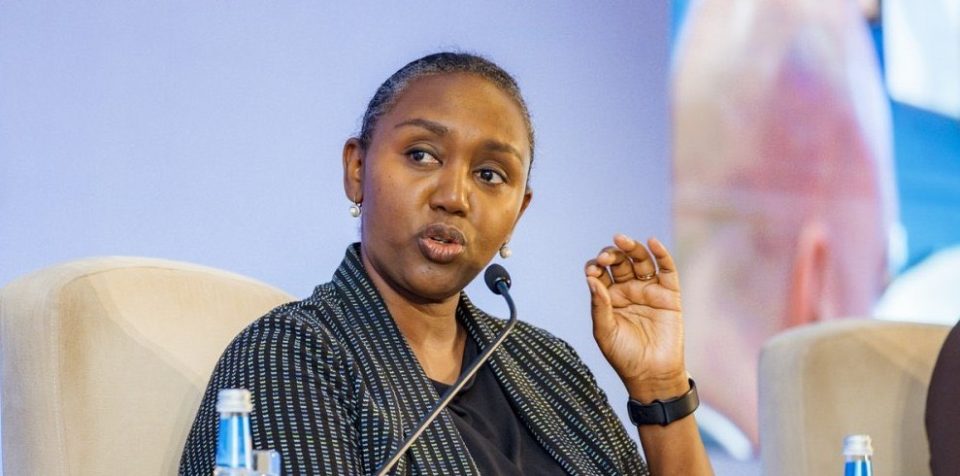
The Rwandan government has pushed back strongly against remarks attributed to Uganda’s Chief of Defence Forces, Gen. Muhoozi Kainerugaba accusing him of introducing ethnic characterisation into a political dispute and warning that such sentiments should not be associated with Rwanda or Rwandans.
Rwandan government spokesperson Yolande Makolo said Kigali had seen Muhoozi’s post and the questions it raised but rejected what she described as ethnic extremism and divisive thinking.
“One can have their opinion about Rwanda, but they should not misrepresent Rwandans or associate us with that kind of thinking,” Makolo said.
Her remarks followed Muhoozi’s reported reference to his brother-in-law, businessman Odrek Rwabwogo in terms of his ethnic identity, including describing him as not a Muhima but a Muhutu.
The remarks have generated strong reactions because ethnic identity remains an extremely sensitive subject in Rwanda where authorities have for decades pursued policies aimed at discouraging ethnic division and promoting a unified national identity.
Makolo appeared particularly concerned about attempts to associate such sentiments with Rwanda, making it clear that Kigali does not want to be dragged into ethnic politics taking place in Uganda.
“If the post was about Uganda, it should be kept Ugandan and not drag us into it,” she said.
The controversy comes against the backdrop of growing political speculation in Uganda over succession and competing interests around President Yoweri Kaguta Museveni with Muhoozi increasingly at the centre of discussions about Uganda’s political future.
For Kigali, however, Makolo’s response suggests that the use of ethnic labels in political disputes is a line it does not want crossed.
The Rwandan government spokesperson stressed that Rwanda’s national project over the past three decades has been built around moving away from ethnic divisions and strengthening national unity.
“As you rightly point out, Rwanda does not subscribe to ethnic extremism. We have worked hard to leave this behind us,” Makolo said.
“We do not need it and do not want it.”
She said Rwanda’s experience had made national unity a fundamental political choice that the country intends to protect.
“Our national vision and efforts in the last 32 years have been about uniting Rwandans, and we will continue to safeguard this fundamental political choice,” Makolo added.
Rwanda’s rejection of ethnic politics is rooted in the country’s history, particularly the 1994 Genocide against the Tutsi in which more than 800,000 people were killed, according to widely cited estimates. The genocide was fuelled by extremist ideology and longstanding ethnic divisions.
Makolo’s intervention therefore amounts to a direct warning that political disagreements in Uganda should not be framed in ways that revive or legitimise ethnic divisions and that Rwanda should not be portrayed as endorsing such thinking.
“Individuals can have their opinion about Rwanda,” Makolo said, but argued that those opinions should not be used to misrepresent Rwandans or associate them with ethnic extremism.
Her comments h places Muhoozi’s remarks under renewed scrutiny particularly because of the historical and political weight attached to ethnic labelling in the Great Lakes region.